

STRANDED ASSET | VALUATION | ADAPTIVE REUSE
THE STRANDED ASSET THAT WASN’T
A vacant campus that nobody could value.
ASSET TYPE
Suburban Corporate Campus
LOCATION
Mid-West
SCALE
>1,000,000 GBSF / 11 Buildings
PROBLEM
Book value exceeded market value
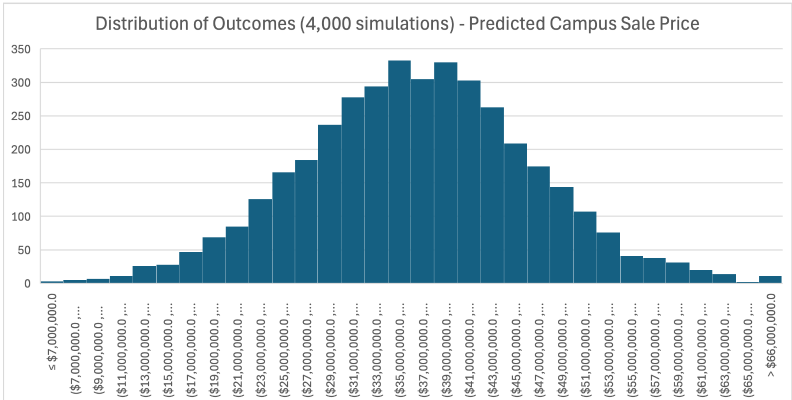
$30-40MM
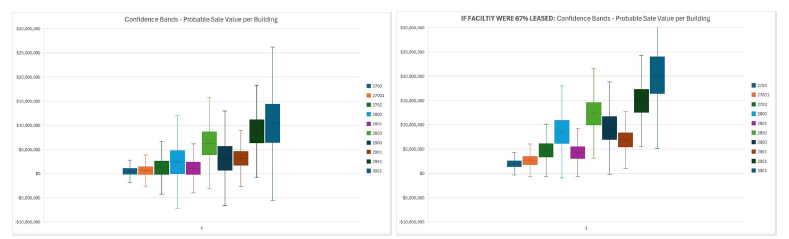
Convergence of three valuation methodologies
4,000+
Stochastically simulated synthetic comparable data set
200 x 700
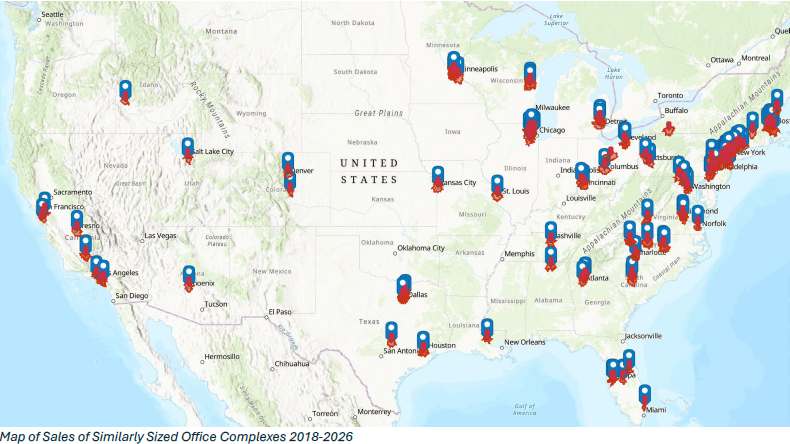
Scraped campus trades loaded into the synthetic comp engine with 700 attributes per market
2% p-value
10 Attributes with p-value less than 2% after linear regression
ABSTRACT: THE MARKET HAD ALREADY WRITTEN IT OFF. THAT'S WHAT MADE IT INTERESTING.
The market sees vacancy and book value. We saw the structural conditions that define the first wave of adaptive reuse at scale and the specific intervention required to unlock it.
Two independent valuation systems were constructed and run simultaneously without calibration against each other. One grounded in stabilized residual extraction across ten building typologies. One grounded in a statistical model built from 200+ national campus trades, 700 attributes per building, 4,000+ stochastic simulations.
They converged within a $30–40M band.
The conventional redevelopment pathways: Multifamily, industrial, office conversion, were each modeled against calibrated market inputs. None materially exceeded the clearing band. The only tested pathway that shifted the land value equation was structural reimagination: destination tournament sports infrastructure, where land value density exceeds suburban office on a per-acre basis and the existing site reduces horizontal cost basis relative to greenfield.
The stranded asset wasn't stranded. It was misread.